How to Clean an Engine Safely: A Powerful Degreaser Cleaner Guide
Over time, engines can accumulate grease, oil, dirt, and debris that are tough to remove without the right degreaser cleaner. Keeping the engine compartment clean not only improves appearance but can also make maintenance inspections easier and help you spot potential issues before they become costly repairs. A clean engine is a sign of a well-cared-for vehicle, and it all starts with the right approach and the right products.
Here are a few simple steps to clean your engine safely.
Step 1: Let the Engine Cool Down
Never clean a hot engine. Make sure the vehicle has been turned off long enough for all components to cool completely.
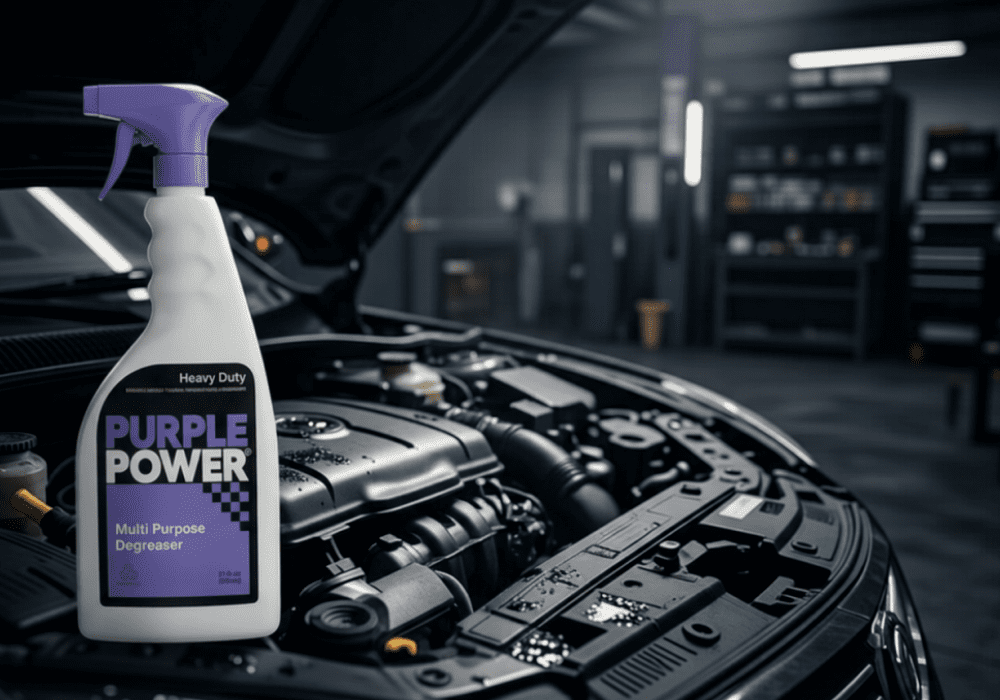
Applying a degreaser cleaner to a hot surface can cause it to evaporate too quickly, reducing its effectiveness and potentially damaging sensitive parts. Patience at this stage makes the entire process safer and more efficient.
Step 2: Protect Sensitive Components
Cover electrical parts, exposed wiring, and air intake openings before applying any cleaning products. Water and cleaning solutions can cause serious damage to these areas if left unprotected. Taking a few extra minutes to cover them properly ensures that your degreaser cleaner does its job without causing unintended harm to your engine.
Step 3: Apply a Degreaser Cleaner
Spray a quality degreaser cleaner onto greasy areas and allow it to work for a few minutes. This helps loosen built-up oil, grime, and stubborn dirt that regular cleaning products simply can’t handle. The longer you let it sit, the more effectively it breaks down heavy grease deposits, making the next steps much easier.
Purple Power Multi-Purpose Degreaser Cleaner is designed to tackle tough grease and oil deposits on engines, tools, garage floors, and other hard-working surfaces. Its heavy-duty formula penetrates deep into grease layers, lifting them away without damaging the surfaces underneath — making it the ideal choice for engine cleaning.
Step 4: Gently Scrub and Rinse
Use a brush to loosen heavy buildup where needed after applying the degreaser cleaner, paying special attention to corners and hard-to-reach areas where grease and grime tend to collect the most. A medium bristle brush works best for most engine surfaces without scratching delicate parts. Then carefully rinse or wipe away residue according to the cleaning method recommended for your vehicle. Avoid using high-pressure water directly on sensitive components, and work from top to bottom so loosened debris and degreaser cleaner residue don’t fall onto already-cleaned areas.
Step 5: Allow Everything to Dry
After rinsing away the degreaser cleaner, make sure all components are completely dry and any protective coverings have been removed before starting the engine. This step is more important than it may seem, as moisture left on electrical parts or connectors can cause shorts or performance issues. You can speed up the drying process by using a clean microfiber cloth on accessible areas, or simply allow the engine bay to air dry for 15 to 20 minutes. Taking the time to properly dry the surfaces after using a degreaser cleaner helps ensure a safe and smooth restart every time.
Keep Your Engine Looking Clean
Routine engine cleaning with a reliable degreaser cleaner can help reduce grime buildup and keep your vehicle looking well maintained. With the right product and proper precautions, the job can be simple, safe, and effective. Making it a regular part of your vehicle maintenance routine means less buildup over time and an engine that always looks as good as it runs.
Frequently Asked Questions
What is an engine degreaser used for?
An engine degreaser is designed to break down grease, oil, dirt, and road grime that accumulate on engine components and engine bays. It helps restore cleanliness and makes routine inspections easier.
How do I clean an engine bay safely?
To clean an engine bay safely, allow the engine to cool, cover sensitive electrical components, apply a suitable engine degreaser, let it sit for the recommended contact time, and then rinse or wipe away the loosened contaminants.
What is the best engine degreaser for heavy grease buildup?
The best engine degreaser is one that can penetrate thick layers of oil, grease, and dirt while remaining easy to apply and rinse. Heavy-duty degreasers are commonly used for challenging automotive cleaning jobs.
How often should you degrease an engine?
Most vehicles benefit from engine cleaning every six to twelve months, depending on driving conditions, mileage, and exposure to dirt, oil, and road contaminants.
Can an engine degreaser remove old oil residue?
Yes. A quality engine degreaser is formulated to loosen and dissolve old oil residue, grease deposits, and stubborn grime that accumulate over time.
Can I pressure wash an engine after applying a degreaser?
Yes, but use caution. Avoid spraying high-pressure water directly on electrical components, sensors, and wiring. Always clean the engine when it is cool and follow the product instructions.
What causes grease buildup in an engine bay?
Grease buildup is usually caused by oil leaks, fluid residue, road grime, dust, and dirt. Engine heat causes these contaminants to stick to surfaces over time.
Is it safe to clean an engine without removing parts?
Yes. Most engine bays can be cleaned without removing parts. Simply ensure the engine is cool and protect sensitive electrical components if needed.
How can I keep my engine bay clean for longer?
Regular cleaning, fixing leaks promptly, and removing dirt and oil buildup before it accumulates can help keep your engine bay cleaner for longer.
What's the difference between an engine cleaner and an engine degreaser?
An engine cleaner is typically used for light dirt and grime, while an engine degreaser is formulated to remove heavy grease, oil, and stubborn buildup.